Ørslev
Ørslev is located on the Daisy Route between Holsteinborg Manor and the road to Glænø.
Ørslev is a typical transit village, with houses and rural properties on both sides of the road.
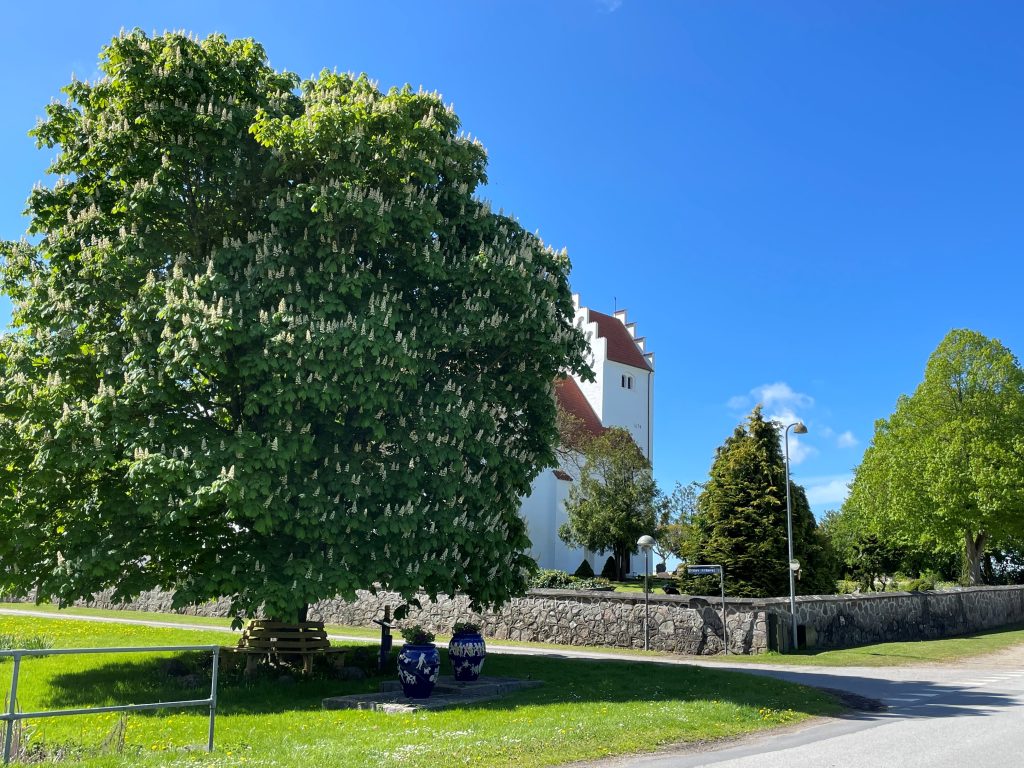
In the western part of the village, Ørslev Church is idyllically situated by the village pond. The church is particularly known for the fresco “Dansefrisen” (The Dance Frieze), which dates back to the 14th century.
Opposite the church is Ørslev Kildevej, where you’ll find St. John’s Spring. Pilgrims flocked here as far back as the 14th century, seeking healing for pains, fevers, and coughing children. At midsummer on St. John’s Eve, it was believed the water was especially curative.
On the grass by the village pond, you’ll find the Ørslev Pots. These were created in 2020 by ceramist Nelly Gaskin from Skælskør. She illustrated the history and story of a village, neighborliness, social cohesion, the church’s characteristics, the holy spring, nature, and gatherings among the residents in and around Ørslev. These attractions often draw visitors who frequently settle by the village pond to enjoy their packed food and drinks at the tables and benches provided.
From the church, there’s an approximately 3 km long church path leading through open fields towards Stubberup. From here, you can either continue towards Glænø or Stubberup/Basnæs Forest, or loop back to Ørslev. Ørslev has 48 households within the village limits. There are still a few conventional farms and some artisans, but most of the village’s residents commute to workplaces elsewhere. Ørslev hosts several community-building activities throughout the year, including Friday grills during the warmer months, pétanque tournaments, the Ørslev Festival, “Eat & Sing” at the church during the darker season, and Christmas lights over Ørslev.