Boeslunde
Boeslunde village is located in the western part of Slagelse Municipality, between Skælskør, Korsør, and Slagelse, in a hilly and scenic area characterized by agriculture, manor landscapes, and significant cultural-historical traces. The village belongs to the former Skælskør Municipality and is one of the region’s oldest settlements, with roots dating back to the Bronze Age.
Boeslunde is particularly known for its many archaeological finds and is considered one of Denmark’s most important ancient sites. Around Borgbjerg Banke, large gold rings, sacrificial finds, and more than 2,000 small gold spirals from the Bronze Age have been discovered over time, bringing international archaeological attention to the area. Archaeologists believe the area may have been a religious and political power center during the Bronze Age.
In the middle of the village lies Boeslunde Church, which dates back to the Middle Ages and holds significant cultural-historical value. The church is known for its famous medieval altarpiece, which is now housed at the National Museum.
Historically, the village has been shaped by agriculture and its connection to larger farms and manors in the area, including Espe, an old manor with roots dating back to the 16th century.
Today, Boeslunde has approximately 750 inhabitants and functions as an active local community with a strong club life and local gatherings. The town has a community hall, church life, recreational activities, and local events that bring residents together across generations. The nature surrounding the village is actively used for walks, outdoor life, and local activities.
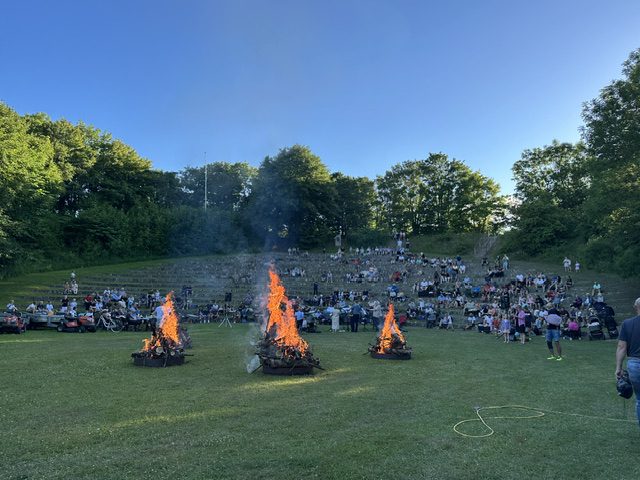
Borgbjerg Banke and Boeslunde Memorial Park currently serve as a central gathering place in the town. In 1939, the area was transformed into an amphitheater and continues to be used for events and communal activities for the village’s residents.
Read more on their website